National Initiative for Civic Education (Nice) Trust has attributed the low voter turnout in the September 16 2025 General Election to several factors, including misinformation and politicians’ failure to deliver campaign promises.
In an interview yesterday, Nice Trust civic education programmes coordinator Christopher Naphiyo also cited long distances to National Registration Bureau (NRB) centres which discouraged eligible voters without national identity cards from registering, false information disseminated by some politicians about election management devices (EMDs), disillusionment with elected representatives and failure by major political parties to mobilise their supporters to register.
He observed that some political parties only began mobilising supporters during the final phase of registration.
“These factors need to be addressed. Civic education is not a solution to all the election ills, much as it is very important,” said Naphiyo.
Nice Trust was reacting to a Malawi Electoral Commission (MEC) post-2025 General Election Review Report which said that electoral stakeholders considered civic and voter education insufficient, untimely and inadequately delivered.
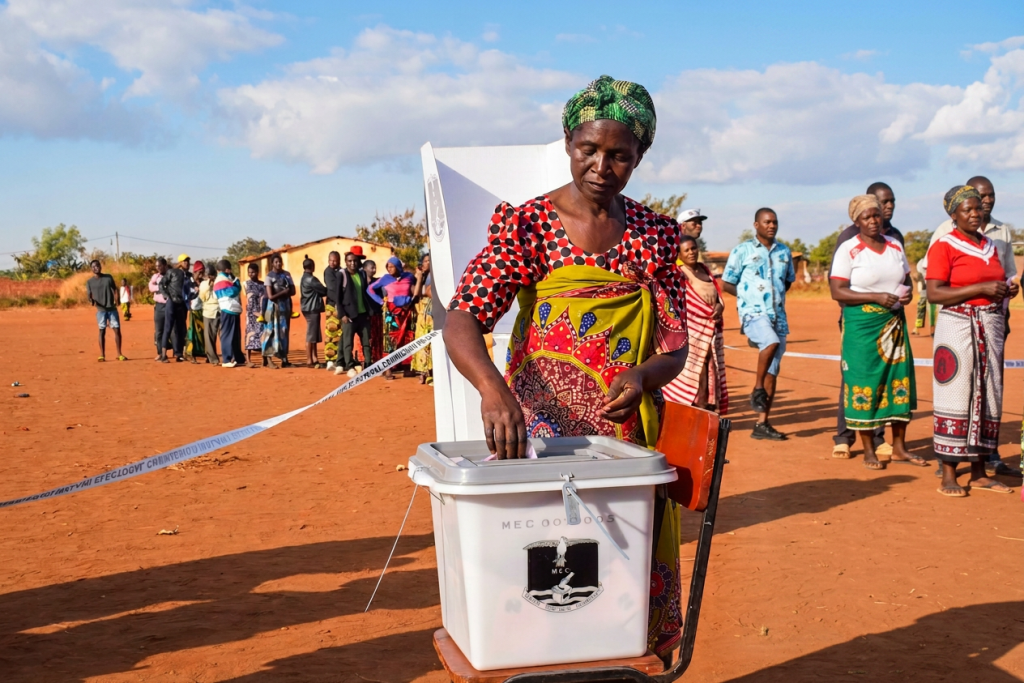
MEC said it accredited 121 civil society organisations (CSOs) to provide civic and voter education, but only a few secured funding to undertake grassroots activities.
Besides the 121 CSOs, MEC also accredited 124 drama groups, 12 musicians, eight dance troupes, three mobile cinemas and 48 roadshow promoters with an envisaged 8.69 million people.
Naphiyo said the 2025 voter turnout could not be attributed squarely to the adequacy of civic and voter education or the resources available for it.
He said Nice Trust had reasonable resources for civic and voter education and, after noting acute funding challenges among other accredited partners, redirected all available resources towards the elections.
Said Naphiyo: “It is important to understand that our strategic plan for 2021-26 has four pillars and our resources were distributed across all the pillars and elections was only a small section of our pillar on national building processes. A decision had to be made to mainstream elections in activities across all the four pillars.
“This was far more than we had budgeted because many other areas of our work, including that of empowering accountability groups like citizen forums had to suffer somehow in order to fulfil election requirements considering that Nice has multiple roles in elections, namely; awareness raising and mobilisation, observation and support for peace-building.”
He argued that Nice Trust’s investment had a significant impact, pointing out that the 76.4 percent voter turnout was relatively high compared with recent elections in other Southern African Development Community (Sadc) countries.
South Africa recorded 58.6 percent turnout in its 2024 elections while Mozambique had 42.2 percent in its 2024 elections and Zambia saw a 57 percent turnout in its August 2026 elections.
For continuous civic and voter education through to 2030, Naphiyo said Nice Trust would require more than K4 billion, excluding overhead expenses.
Meanwhile, non-governmental organisations have indicated a budget of between K80 billion and K100 billion, subject to inflation, to conduct effective continuous civic and voter education up to September 2030.
Civil Society Elections Integrity Forum chairperson Benedicto Kondowe said inadequate and underfunded civic and voter education was among the significant factors affecting participation in the 2025 election.
He also cited growing disillusionment among citizens over unmet expectations from elected representatives, misinformation and the failure by political parties to effectively engage and mobilise voters.
In a separate interview, Nyika Institute executive director Moses Mkandawire said that while several factors contribute to voter apathy, lack of funding and insufficient civic and voter education could not be ruled out.
He said funding challenges reduced the number of actors on the ground, affecting both the number of people reached and the ability to sustain engagement throughout the electoral cycle.
“Sometimes it also has to do with the capacity of the civic and voter education providers, because we have seen elsewhere, if capacity is terribly low then the message that is being relayed may not be attractive as it could have been. You need to have attractive messages by the actors on the ground,” said Mkandawire.
Political analyst George Chaima, however, said poor and inadequate civic and voter education contributed significantly to the low turnout.
He said voters needed continuous engagement on what to do and why participating in elections was important.
The MEC report said voter turnout and the number of void votes raised questions about the effectiveness of civic and voter education.
The voter turnout in the 2025 General Election was 76.4 percent, representing 5 502 982 voters, but this amounted to 50 percent of the projected eligible population.
The 76.4 percent turnout was slightly below the average turnout of 78 percent recorded across Malawi’s elections. The void vote rate was 2.8 percent.